
The Short Answer
If you search "0dte options list" today, you will get four different answers from four different sites, and at least two of them will be wrong by the time you read this. The short version: as of November 2026, true daily (0DTE) expirations exist on six products — SPX/SPXW, XSP, NDX/NDXP, SPY, QQQ, and IWM — plus a short, named list of single stocks that get Monday and Wednesday expirations on top of the standard Friday weekly. No single stock trades a full Monday-through-Friday cycle. Below is a sourced table for every product, the rule that explains why the lists online keep disagreeing with each other, and a three-step method so you can check any of this yourself the next time an exchange adds a name.
What "0DTE" Actually Means
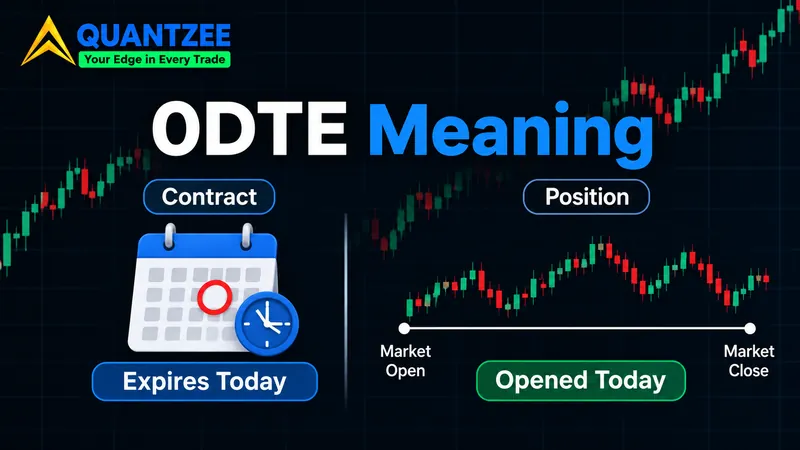
A 0DTE (zero days to expiration) contract is simply an option that expires the same trading day it's bought, though our guide to the two competing 0dte definitions explains why that phrasing blends two definitions market sources don't always agree on. It isn't a separate product category — it's a weekly or daily-cycle contract viewed on its final day. SPX Weeklys (SPXW) have existed since 2016; what changed is which days of the week carry an expiration. Cboe added Tuesday SPXW expirations on April 18, 2022. Thursday expirations followed on May 11, 2022. Together, those two additions completed the Monday-through-Friday cycle on the S&P 500 index. That two-step rollout is also the reason a "2021 list" and a "2023 list" of 0DTE products look nothing alike. The underlying rule moved in stages. Most blog posts were written mid-rollout and simply never got updated after the second step landed.
The Full List: Products With a True Daily (Monday–Friday) Cycle
This is the part every competing list gets partly wrong, because they mix "has 0DTE on some days" with "expires daily." Only the following carry a genuine five-day-a-week expiration, confirmed against each product's own Cboe specification page and the OCC's contract directory as of this writing:
| Ticker | Product | Weekday cycle | Settlement | Exercise style | Multiplier | Settlement cut-off |
|---|---|---|---|---|---|---|
| SPX / SPXW | S&P 500 Index | Daily, Mon–Fri | Cash | European | $100 | 4:00 PM ET close (SPXW), 4:00 PM ET on component open (standard SPX AM-settled series) |
| XSP | Mini-SPX Index (1/10th SPX) | Daily, Mon–Fri | Cash | European | $100 | 4:00 PM ET close |
| NDX / NDXP | Nasdaq-100 Index | Daily, Mon–Fri (NDXP series) | Cash | European | $100 | 4:00 PM ET close |
| SPY | SPDR S&P 500 ETF | Daily, Mon–Fri | Physical (shares) | American | $100 (100 shares/contract) | 4:00 PM ET close, assignment overnight |
| QQQ | Invesco QQQ Trust | Daily, Mon–Fri | Physical (shares) | American | $100 (100 shares/contract) | 4:00 PM ET close, assignment overnight |
| IWM | iShares Russell 2000 ETF | Daily, Mon–Fri | Physical (shares) | American | $100 (100 shares/contract) | 4:00 PM ET close, assignment overnight |
As of November 2026. Listing status changes — see the re-derivation steps below before trading any of these on the assumption this table never moves.
Single Stocks: Monday and Wednesday, Not a Daily Cycle
This is where most of the lists we read fall apart. Several blog posts imply that because index options go daily, individual stocks eventually will too. As of this writing, that hasn't happened. A defined group of large, heavily-traded single names carries Monday and Wednesday expirations in addition to the standard Friday weekly. Per Cboe's published weeklys product list, that group currently runs to eleven tickers: AAPL, AMD, AMZN, AVGO, GOOGL, INTC, META, MSFT, MU, NVDA, and TSLA. That gives those eleven names a three-day cycle, not five. A trader who assumes NVDA has a Tuesday contract the way SPX does will find no listing to trade. The confusion usually starts with a chart platform that plots "days to expiration" on a stock the same way it does on SPX, without flagging that the underlying cycle is narrower.
The practical consequence: if your scanner or broker platform shows a 0DTE chain on a single stock on a Tuesday or Thursday, check the ticker again — it's almost certainly an index or ETF product being displayed next to a stock quote, not an actual same-day stock option. If you're scanning for these setups mechanically, our guide to TradingView indicators for options traders and index options indicators guide both cover how to build an alert that filters by actual expiration date rather than assuming a daily cycle exists.
Why the 0DTE Lists Online Keep Disagreeing
We compared four of the most-cited 0DTE list pages against the exchange's own specifications before writing this one, and the gaps were not small. One names five products in prose with no table at all. A second lists five and never states the single-stock cycle, so a reader can't tell Monday/Wednesday from daily. A third tables six products and bullets roughly twenty single-name tickers with zero source citation. No link to Cboe. No link to the OCC. Nothing a reader could check against a primary source. None of the four carries a visible "as of" date on the list itself. That missing date matters more than it sounds. Cboe's rollout of the Monday–Friday SPX cycle took thirteen months end to end, so a list frozen at any point in that window was accurate for a few weeks and wrong after that.
That's the actual finding here. The products aren't secret — they're published on Cboe's own site. What's missing from the existing lists is a single table with every attribute side by side, a citation per row, and a dated snapshot that tells you when to double-check it again.
Settlement Type Is the Attribute That Changes Your Overnight Risk
Cash versus physical settlement isn't a footnote — it decides what happens to your account if a short contract finishes in the money. On SPX, XSP, or NDX, exercise produces a cash debit or credit equal to the difference between the settlement value and the strike, multiplied by $100. Nothing physical changes hands and there's no overnight share position to manage. On SPY, QQQ, or IWM, the mechanics are different. These are American-style, physically-settled contracts. An in-the-money short option can be assigned, and assignment delivers — or removes — 100 shares per contract. A trader who sells SPY puts the way they'd sell SPX puts, and ignores this distinction, can wake up long a stock position they didn't plan to hold. The account's buying power is tied up accordingly, which matters most on a day when the position was sized for a cash-settled equivalent and not for carrying shares overnight.
Exercise Style Decides What Can Happen Before the Close
European-style contracts — SPX, SPXW, XSP, NDX, NDXP — can only be exercised at expiration, not early. That's one reason index 0DTE positions behave more predictably into the final hour. Nothing changes under you intraday. American-style contracts — SPY, QQQ, IWM, and the single-stock weeklys — work differently. The holder can exercise at any point before the close on expiration day. A short, deep-in-the-money American option carries real early-assignment risk in the last hour of a 0DTE session, particularly around a dividend date or a sharp late move, which is exactly the window this breakdown of how 0dte premium actually decays hour by hour prices out in detail. This is the kind of detail that separates "I know the ticker trades same-day options" from actually knowing what you're exposed to by 3:30 PM ET. It's also why a short strangle built on SPY and a short strangle built on SPX, same strikes in distance, same expiration date, do not carry the same tail risk going into the final thirty minutes.
Holidays and Half Days Break a Static List
A list that says "SPX expires every weekday" is wrong on a holiday week. When the exchange is closed on a Monday — Presidents' Day, Memorial Day, and similar — that day's expiration simply doesn't exist. There's no makeup session added elsewhere in the week. On early-close half days, like the day after Thanksgiving or a Christmas Eve that falls on a trading day, the 4:00 PM ET settlement cut-off most of this table assumes moves to 1:00 PM ET. The standard SPX AM-settled series' final trading session shifts accordingly too. Any list without a visible holiday caveat is quietly wrong five to seven trading days a year. That's not a huge number, but it's exactly the kind of gap that produces a confused trader staring at an empty chain on a Monday morning, wondering why the broker platform shows no contracts for a ticker that traded fine the previous Friday.
How to Re-Derive This List Yourself in Three Steps
Don't take this table — or any other site's — as permanent. Exchanges add products. Here's the three-step check we use, and you can run it yourself in under five minutes:
- Open the product's own specification page on the exchange. For Cboe-listed index products that's the "Tradable Products" section at Cboe.com; for the OCC's contract directory it's theocc.com. Confirm settlement type and exercise style directly from the spec sheet, not from a third-party summary. The Options Industry Council (optionseducation.org) also maintains plain-English explainers of settlement and exercise mechanics if the raw spec sheet is hard to parse.
- Pull the live expiration calendar for that specific ticker, not a general options calendar. Cboe's weeklys product page lists which tickers currently carry daily versus Monday/Wednesday/Friday versus Friday-only cycles, and it's updated when a product's cycle changes. Data from the exchange's rule filings — many of which are posted publicly on sec.gov when a new expiration cycle is approved — is the most authoritative record of exactly when a product's schedule changed.
- Check the exchange holiday schedule for the month you're trading, and cross off any session that falls on a market holiday or early-close day before assuming a contract exists.
Our data for this piece came from exactly that process — no ticker made this table without a direct check against the exchange's own specification and calendar pages, read on the date noted above. If a product couldn't be confirmed from a primary source, it was left off rather than copied from another blog's list. For a refresher on how contract multipliers and strike pricing feed into position sizing once you've confirmed a ticker's mechanics, our options Greeks glossary and open interest glossary are useful next stops.
Why the Volatility Index Isn't on This List
If you've been reading about VIX options expecting them to show up here, they don't belong on a 0DTE list the way SPX does. VIX options settle on a weekly (mostly Wednesday) cycle tied to the 30-day forward variance calculation, not a Monday-through-Friday daily cycle, and the settlement mechanics around a VIX expiration are different enough from equity-index 0DTE that they deserve their own treatment rather than a single row in this table. Our guide to trading volatility index options covers the VIX settlement calendar, the AM-settlement quirk, and how VIX option pricing behaves differently from SPX 0DTE in the final hour.
A Note on Methodology
This table was built, not scraped. Our team at Quantzee pulled the current weeklys and 0DTE product lists directly from Cboe's own published pages, cross-referenced each ticker's settlement type and exercise style against its individual product specification, and checked the single-stock names against the same source rather than against a competitor's article. Where a detail couldn't be confirmed against a primary source — a liquidity figure, a spread estimate, a claim about which stock is "likely next" to get daily options — we left it out. According to the product specifications we checked, every entry above reflects what's actually listed today, not what a trader assumes should be listed based on how index options evolved.
None of this is a recommendation to trade any of these products, and nothing here should be read as a signal, a forecast, or advice. Quantzee builds analytical software for traders who already understand what they're trading; this list exists so you can confirm a contract's mechanics before you're in a position, not while you're in one.