For decades, reading a chart meant the same handful of moves. Drop a moving average, add RSI, draw a trendline, eyeball the structure, and make a call. The tools were static formulas invented in an era of paper charts, and traders adapted themselves to the tools. In 2026 that relationship is inverting. Increasingly, the tools adapt to the trader and to the market, and that single shift is changing how charts get read at a fundamental level.
This is not about robots replacing traders. It is about what changes when the analysis layer stops being a fixed formula and starts being something that learns from conditions. Here is what is actually different now.
From fixed formulas to adaptive analysis
A classic indicator does exactly one thing forever. A 14-period RSI computes the same way on a calm bluechip and a violent altcoin, in a quiet range and a screaming breakout. That consistency is also its weakness. The market changes character constantly, and a frozen formula cannot.
The defining change in 2026 is adaptiveness. Modern AI-driven indicators adjust their sensitivity and behaviour to current volatility and regime instead of applying one rigid setting to every chart. In practice that means fewer false signals in chop and faster recognition when a genuine trend begins, because the tool is reading the environment rather than ignoring it. Investopedia’s overview of artificial intelligence frames the core idea well: systems that adjust their output based on patterns in data, which is precisely what separates an adaptive indicator from a static one.
This is the substance behind our own AI indicator suite, where the logic shifts with conditions rather than forcing one formula onto every market.
Real-time pattern recognition, without the eye strain
The second change is speed and scale of perception. A human can watch a handful of charts well. Watching forty across crypto, forex, and indices simultaneously, catching the moment a pattern completes on each, is simply beyond human attention.
AI does not get tired or distracted. It can scan many instruments at once and flag a setup the instant it forms, then alert you. That does not remove your judgement; it removes the grunt work of staring. You spend your attention deciding whether a flagged setup is worth taking, rather than spending it hunting for setups in the first place. The result is broader market coverage with less screen time, which is a meaningful change in the daily experience of trading.
The non-repainting line in the sand
Here is where the 2026 conversation gets serious, because “AI” has become a marketing sticker slapped on plenty of tools that do not deserve it. The honest dividing line is whether a tool’s signals are non-repainting.
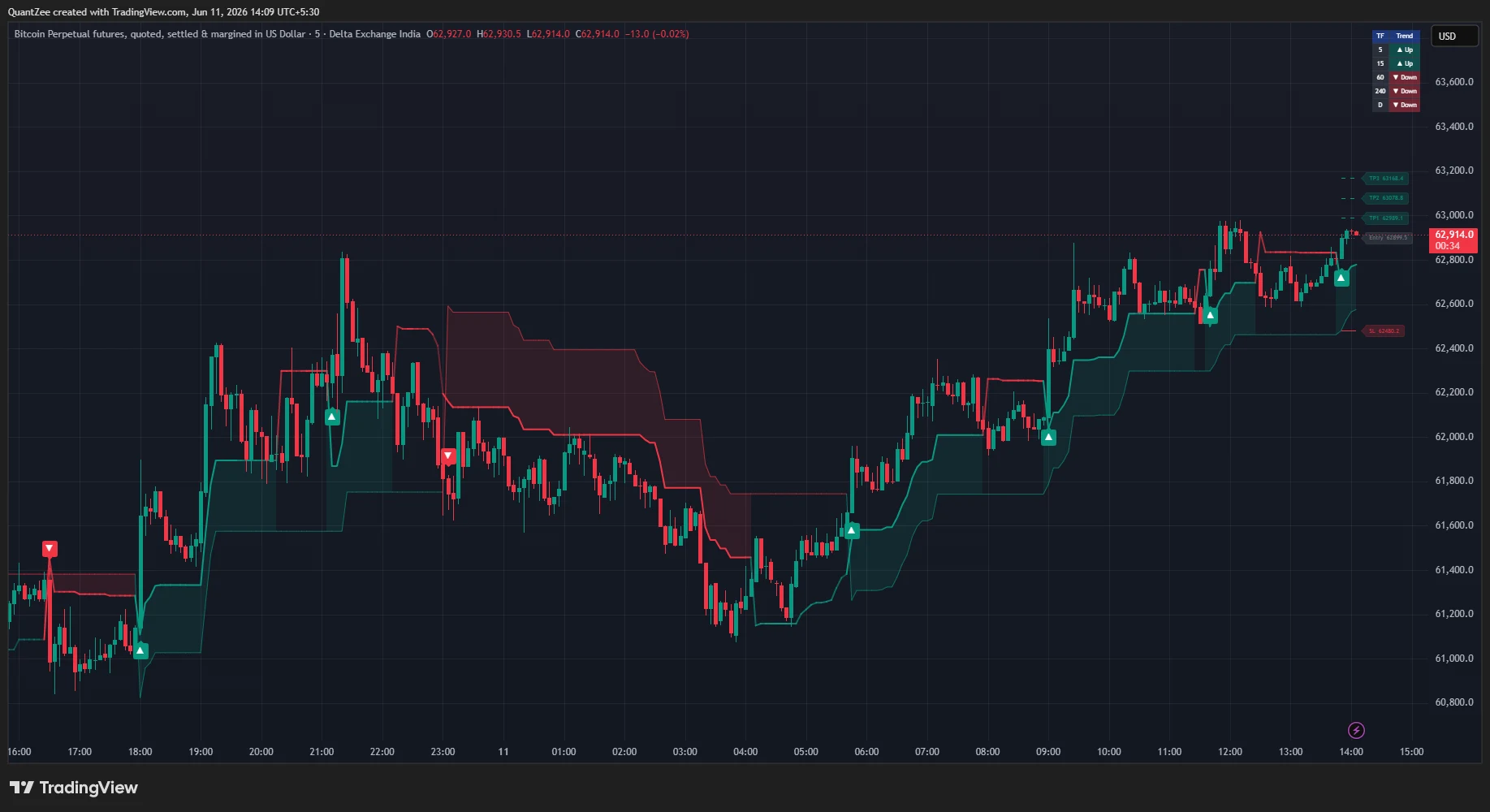
A repainting indicator, AI-branded or not, redraws its signals after the fact, so its history looks perfect and its live performance does not. Genuine adaptive analysis is worthless if the output rewrites itself once you would have acted on it. The credible AI tools lock their signals the moment they print, which is the whole point of our non-repainting TradingView indicators. When you evaluate anything calling itself AI, this is the test that cuts through the hype.
What stays exactly the same
For all the change, the parts of trading that matter most have not moved an inch. Risk management is still the difference between survival and ruin. Position sizing, stops, and discipline are still yours to own. An AI signal is an input, not a command, and the trader who treats it as a command will lose just as surely as the one who chased every RSI cross a decade ago.
What AI changes is the quality and reach of the inputs. It does not change the responsibility for the decision. The best traders in 2026 are not the ones who blindly follow an algorithm; they are the ones who use better tools to inform sharper, still-human calls. Our roundup of the best TradingView indicators for 2026 reflects exactly that balance, and you can see how access is structured on the pricing page.
Where this is heading
The direction is clear. Chart reading is moving from “apply a fixed formula and interpret it” toward “let an adaptive system surface and contextualise opportunities, then decide.” The trendline and the moving average are not disappearing; they are being joined by tools that adjust, scan, and alert at a scale and speed no human can match.
The traders who thrive will be the ones who embrace the better inputs without surrendering the judgement. AI is changing how charts get read in 2026. It is not changing who is responsible for the trade.